Food and Agriculture Organization
Drafting the Implementation of Vertical Farming in Populated Countries
Discussing Frameworks for Scarce Resource Allocations of Agricultural Goods in Regions of Conflict
Format: HMUN
Council Background
The Food and Agriculture Organization (FAO) is a specialized agency of the United Nations that leads international efforts to defeat hunger. Our goal is to achieve food security for all and make sure that people have regular access to enough high-quality food to lead active, healthy lives. With 194 members - 193 countries and the European Union, FAO works in over 130 countries worldwide.
SDG 2 promotes ending hunger, achieving food security and improved nutrition and reaching sustainable agriculture. Referring to target 2.1, which, by 2030, aims to ensure sustainable food production systems and implement resilient agricultural practices that increase productivity and production, that help maintain ecosystems, that strengthen capacity for adaptation to climate change, extreme weather, drought, flooding and other disasters and that progressively improve land and soil quality, aligns with agenda: Drafting the Implementation of Vertical Farming in Populated Countries, as workers on farms in populated countries can maximise their output, showing potential for international investment in said countries. Based on target 2.1, this SDG puts a goal of ending hunger and ensuring access by all people, in particular the poor and people in vulnerable situations, including infants, to safe, nutritious and sufficient food all year round by another few years which associates with the agenda: Discussing Frameworks for Scarce Resource Allocations of Agricultural Goods in Regions of Conflict, as it concerns the distribution of resources amongst those marginalised persons.
Agenda 1
Drafting the Implementation of Vertical Farming in Populated Countries
Concerns a new type of farm featuring a vertical tower rather than large acres of land for storage. Considered to be in its experimental phase, many farms in countries such as China have been using them, showing that they see the potential in space-friendly farms.
Agenda 2
Discussing Frameworks for Scarce Resource Allocations of Agricultural Goods in Regions of Conflict
Concerns the distribution of agricultural resources to people in regions of conflict and the likes. Agriculture in war zones faces high production costs, power outages, and restricted access to fields, severely impacting both local livelihoods and global food supply. As the field of agriculture is also confined to many factors such as climate and land stability, this topic aims to discuss the consequences and solutions to the matter.
Research Report
Download PDFCountry Matrix
View MatrixMeet the Dais
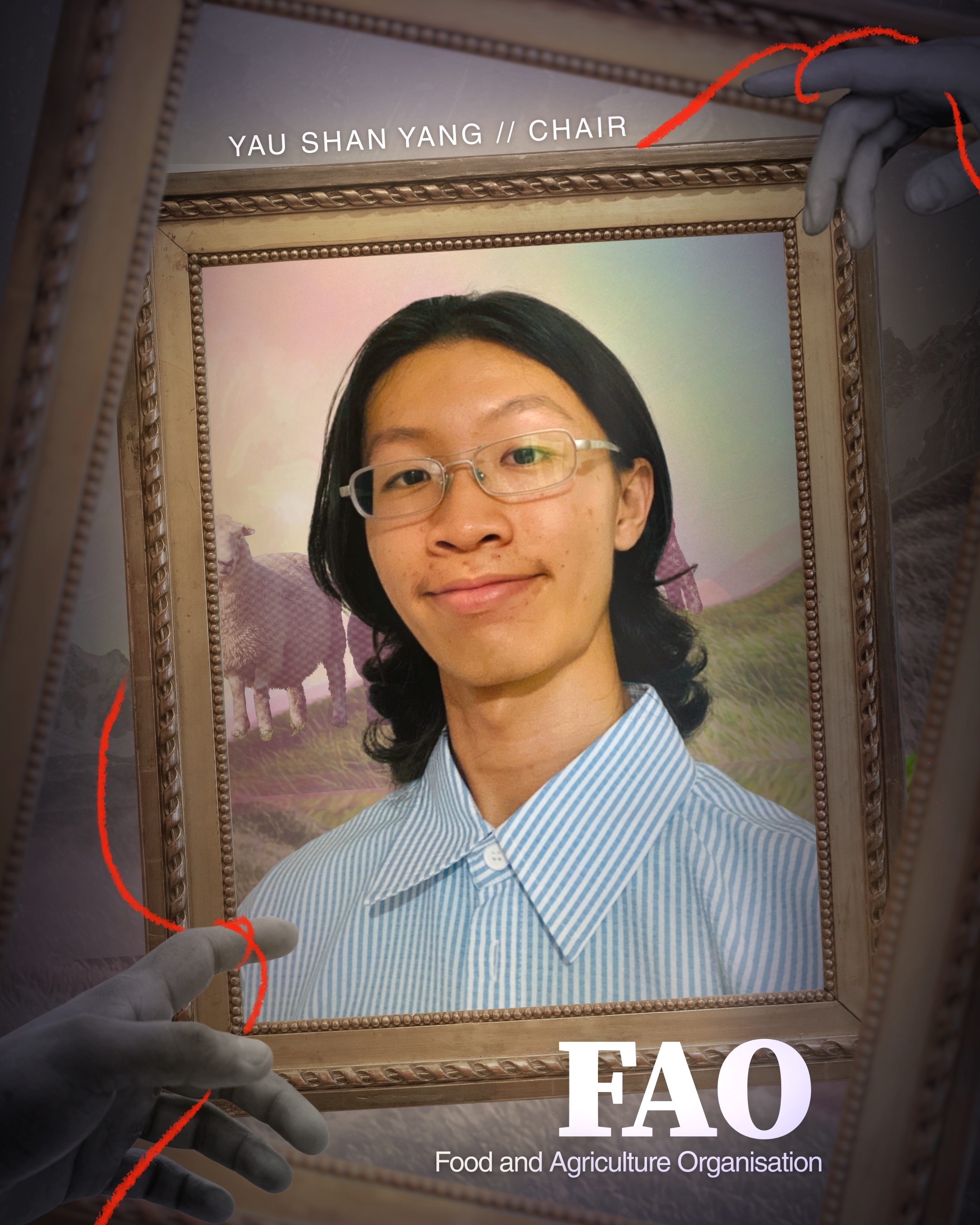
Yau Shan Yang
Chair
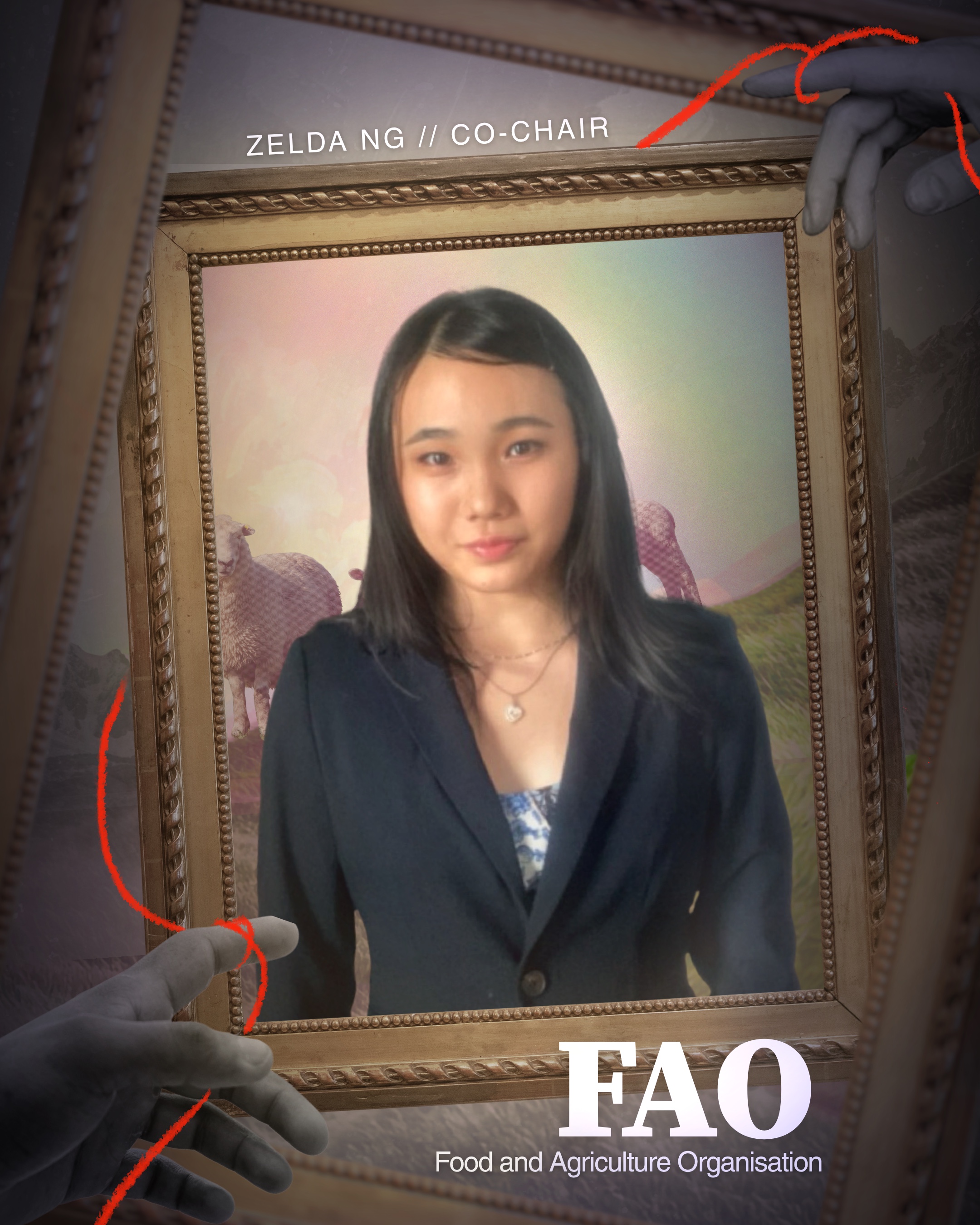
Zelda Ng
Co-Chair